
Loading...
Serving Midland, MI and surrounding areas. (989) 486-6774
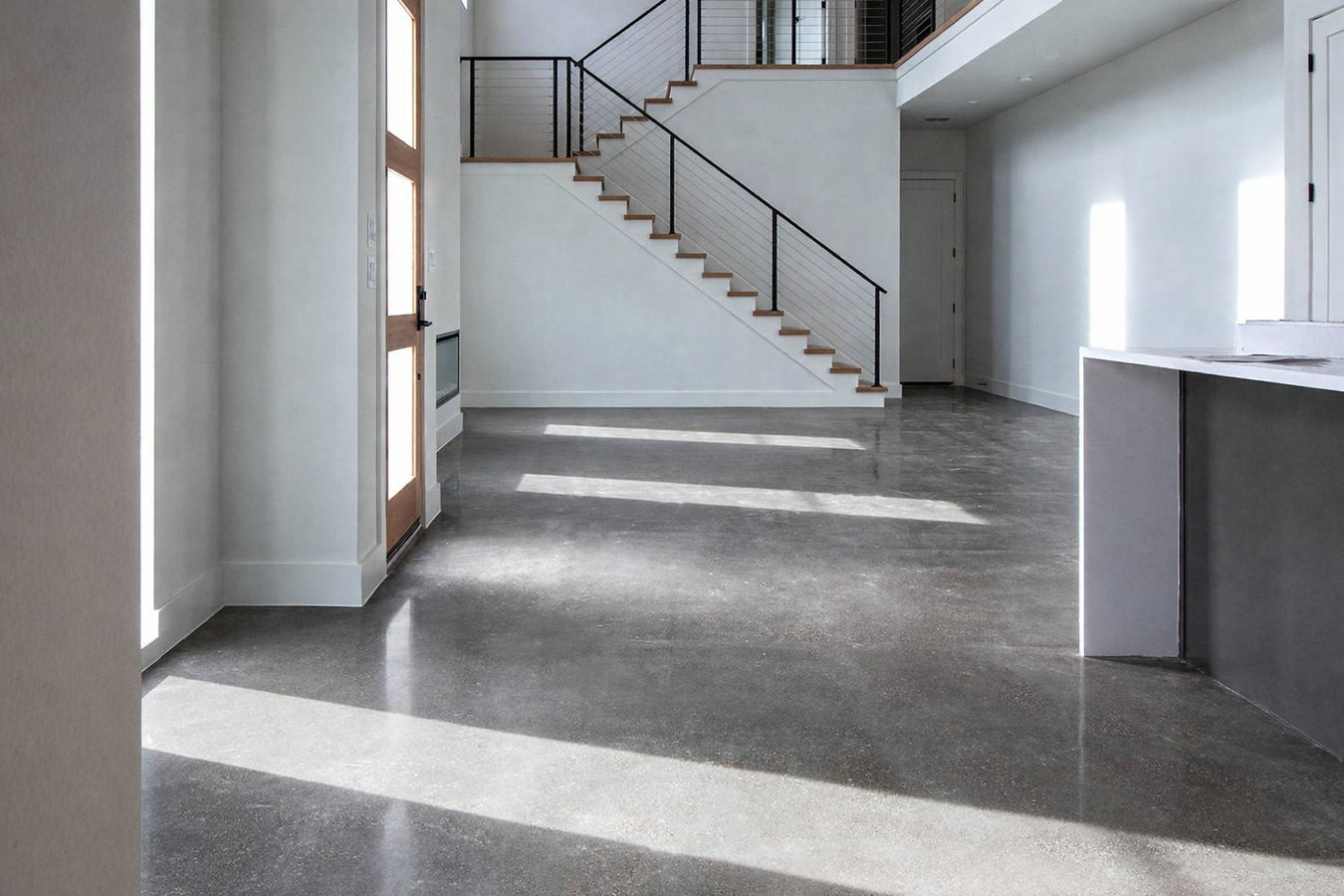
Cracked, damp, or uneven floors in Midland homes are a common problem. We install concrete floors with the vapor barriers and subgrade prep that mid-Michigan soil demands.
Concrete floor installation in Midland, MI involves removing the old floor, compacting the subgrade, laying a vapor barrier, and pouring concrete to the right thickness, with most residential projects taking one to three days of active work depending on the size of the space.
A lot of Midland homes were built in the 1950s, 60s, and 70s, and many of those original basement and garage floors are now past the point where patching makes sense. When cracks are widespread, the floor feels uneven underfoot, or dampness is a recurring problem, a full replacement is usually the smarter long-term investment. If you are planning to finish your basement after a new floor goes in, our garage floor concrete team handles that side of the work as well.
The two details that determine how long a floor lasts in Midland are subgrade compaction and moisture management. Midland's clay-heavy soils move with seasonal moisture changes, and a floor poured over poorly compacted ground - or without a vapor barrier - will develop problems regardless of how good the concrete itself is.
If you have patched cracks before and they keep reappearing - or new ones are forming nearby - the floor may be past the point where patching helps. In Midland's older housing stock, this is common in homes built before the 1970s, where the original concrete was poured thinner and without the moisture barriers used today. When cracks are widespread or the floor feels uneven underfoot, replacement is usually the smarter investment.
That white powdery residue is a sign that moisture is moving up through your concrete from the ground below. In Midland, where clay-heavy soils hold water and basements are common, this is a frequent problem in homes that did not have a proper vapor barrier installed under the original floor. Left unaddressed, persistent moisture can damage anything stored on the floor and make the space feel perpetually damp.
If the top layer of your garage floor is peeling away in chips or developing a rough, pitted texture, the surface has been damaged - often by years of road salt tracked in from Midland's winter streets. This surface deterioration is mostly cosmetic at first, but gets worse over time and can eventually compromise the floor's structural integrity.
If you tap on your concrete floor and hear a hollow sound, or if it feels slightly soft in spots, the ground underneath has likely shifted or settled. In Midland, where glacial soils can shift with seasonal moisture changes, this kind of settling is not unusual in older homes - and it is a problem that only gets worse if ignored.
We install concrete floors in basements, garages, utility spaces, and workshops throughout Midland. Every pour starts with thorough subgrade preparation - compacting the base and adding gravel fill where needed - followed by a polyethylene vapor barrier to block ground moisture from working up through the slab. Concrete is poured to the appropriate thickness for the space and its intended use, and control joints are cut in a planned grid pattern so that any shrinkage cracking follows those lines rather than appearing at random. For garage floors, we apply a sealer after curing to protect against the road salt and moisture that are a fact of life in mid-Michigan winters.
If your project is part of a larger renovation - a basement finish, for example - we can coordinate timing so the floor is in place before any framing or utilities are installed. Our garage floor concrete work covers attached and detached garages with surface finishes suited to vehicle traffic, and our concrete pool decks team handles outdoor slab work where a non-slip finish matters.
Best for Midland homeowners with aging floors that show widespread cracking, persistent dampness, or uneven surfaces before a finishing project.
Suits homeowners who want a sealed, road-salt-resistant surface that holds up through Michigan winters without flaking or pitting.
Ideal for homeowners adding a workshop, utility space, or other new structure that needs a properly prepared concrete floor from the ground up.
A significant portion of Midland's residential neighborhoods were built between 1940 and 1979, and many of those homes have original basement floors that are now 50 to 70 years old. These floors were often poured thinner, without vapor barriers, and over subgrades that were not as carefully prepared as modern standards require. Midland's clay-heavy soils - a result of the area's glacial history - hold water and expand when wet, which puts pressure on concrete from below and is a leading cause of the cracking and settling patterns we see in older homes throughout the city.
Midland winters also make timing critical. Fresh concrete that freezes before it cures can be permanently weakened, which is why we schedule pours during the late spring through early fall window. We serve homeowners throughout the region, including Mount Pleasant and Owosso, where similar mid-Michigan soil and climate conditions apply. The Michigan Department of Environment, Great Lakes, and Energy provides resources for Midland homeowners near historically industrial areas who want to check whether any environmental monitoring applies before ground-disturbing work begins.
We reply within one business day and schedule a time to see the space in person. The condition of the existing floor and the ground underneath it can change the scope significantly - so we do not quote over the phone for floor work.
After the visit you receive a written estimate that breaks down labor, materials, and timeline. We also confirm whether a permit is needed for your specific project under Midland's building code - and handle the application if it is.
The crew removes the existing floor if there is one, compacts the subgrade, lays a vapor barrier, and pours the concrete to the specified thickness. Control joints are placed in a planned grid so any shrinkage cracking stays nearly invisible.
The floor needs 24-48 hours before foot traffic and up to 28 days before vehicle use. After curing, we do a walkthrough with you, point out the control joints, and answer questions about care and maintenance - including sealing for garage floors.
We reply within one business day, visit in person before quoting, and handle permits with the City of Midland so you do not have to figure that out on your own.
(989) 486-6774Midland's clay-heavy soils hold moisture, and without a barrier between the ground and your concrete, that moisture will keep working its way up. We install a polyethylene vapor barrier under every basement floor we pour - so ground moisture stays below the slab where it belongs. This is the step that prevents the recurring dampness many Midland homeowners deal with.
Midland's glacial soils can shift with seasonal moisture changes. We take extra care with compaction and base preparation before any pour, because a floor poured over poorly compacted ground will develop problems regardless of how good the concrete itself is. Proper subgrade prep is unglamorous but it is what keeps a floor flat for decades.
Road salt is a fact of life in Midland from November through March, and it is what causes most garage floor surfaces to flake and pit over time. We apply a sealer to garage floors after curing so the surface holds up against the salt and moisture your vehicles track in each winter. The Portland Cement Association guidelines inform the finishing standards we follow on every floor.
Fresh concrete that freezes before it cures can be permanently weakened. We schedule pours during the late spring through early fall window when Midland temperatures support proper curing, and we plan around the weather forecast for any shoulder-season work. That discipline means your floor cures correctly - not rushed in a cold October week because the schedule slipped.
Every concrete floor installation in Midland is designed around what the space will actually be used for - a basement being finished requires different preparation than a utility floor or a garage with heavy vehicle traffic. Getting those details right at the start is what prevents problems later.
Outdoor concrete slabs around pools, poured with a non-slip finish and sealed for Michigan's freeze-thaw climate.
Learn MoreGarage floor pours built for Midland winters, with the right thickness, control joints, and a road-salt-resistant sealer.
Learn MoreMidland's concrete season fills up fast - reach out now to lock in your project date before the summer schedule closes.