
Loading...
Serving Midland, MI and surrounding areas. (989) 486-6774
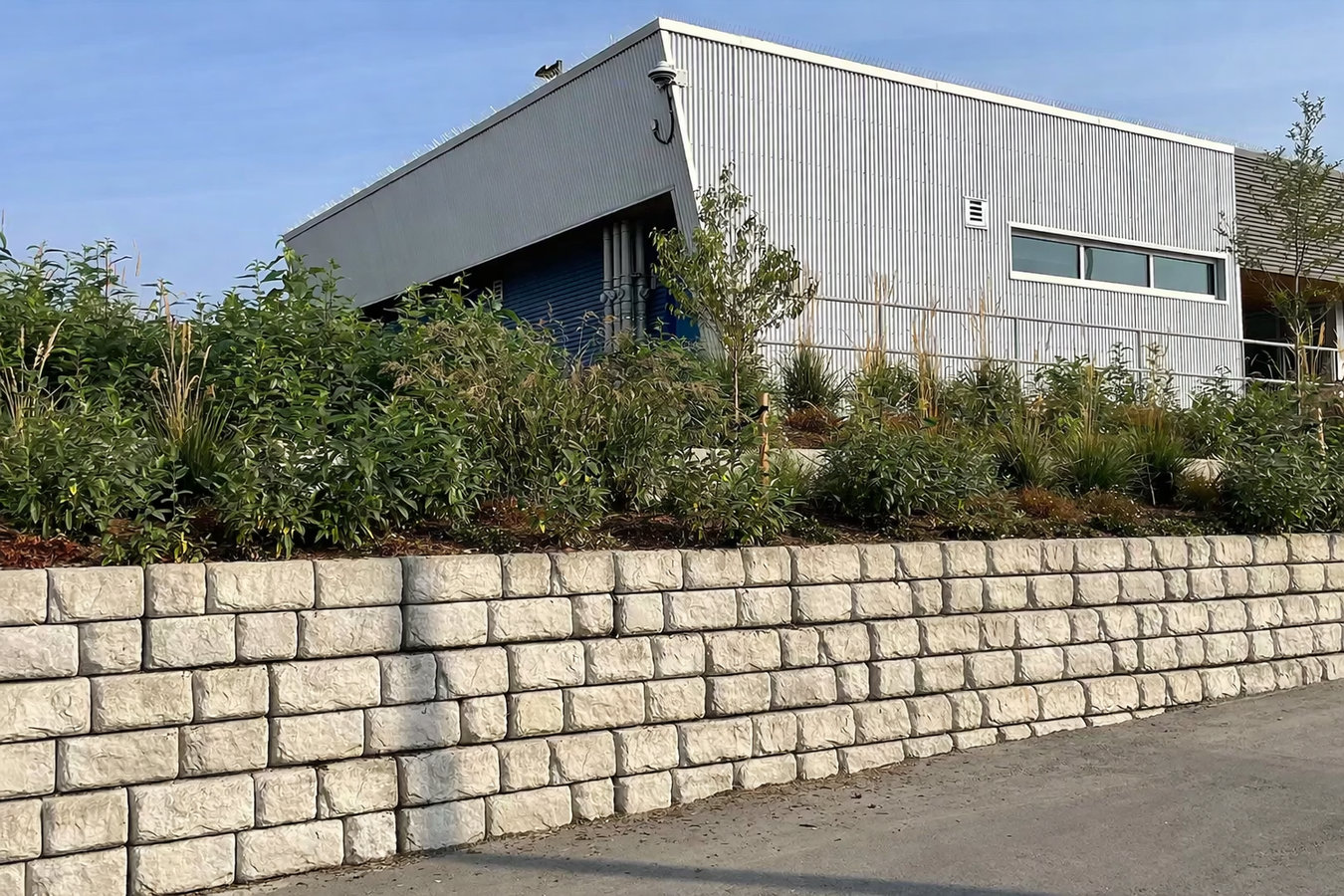
Sloped yards and washing soil are a real problem in mid-Michigan. We build concrete retaining walls with the deep footings and drainage that Midland winters demand.
Concrete retaining walls in Midland, MI hold back soil on slopes and prevent erosion, with most residential projects taking two to five days from start to finish depending on the length and height of the wall.
If you have a sloped yard, a failing older wall, or soil that washes toward your foundation after Midland spring rains, a new retaining wall is the permanent fix. Beyond holding back soil, a well-placed wall can create usable flat space in a yard that felt unusable before. If you are also planning an outdoor living area, our concrete floor installation work pairs well with a retaining wall project.
The difference between a wall that lasts 50 years and one that fails in 10 comes down to two things: how deep the footing goes and whether drainage is installed behind the wall. In Midland, both matter more than almost anywhere else.
If you notice soil creeping down a slope in your yard - especially after Midland spring rains - the ground is not stable. You might see bare patches where grass used to grow, or small ridges of dirt building up at the base of a slope. Left alone, this erosion gets worse each season and can eventually reach your foundation or driveway.
A wall tilting away from the slope it holds is under more pressure than it can handle. Horizontal cracks near the middle of a wall or a noticeable outward bow are signs the wall is failing - not just aging. In Midland's climate, this often happens to older walls built without deep enough footings or proper drainage behind them.
If water collects against your home's foundation rather than draining away, a slope or grade issue is often the cause. Midland spring snowmelt can be significant, and without a retaining wall to redirect water flow, that moisture can work into your basement or crawl space over time. A retaining wall combined with proper grading redirects water away.
If you want to add a patio, garden bed, or parking area to a sloped yard, a retaining wall is what makes that possible. Without one, any flat area you create will erode back into a slope within a few seasons. This is a common project in Midland neighborhoods where lots have natural grade changes.
We build poured concrete walls, concrete masonry unit walls, and precast panel walls depending on what the site and budget call for. Every wall we build starts with a footing dug below Midland's 42-inch frost line - no shortcuts there, because that is what determines whether the wall is still plumb after ten Michigan winters. We also install proper drainage behind every wall: a gravel layer and a perforated pipe that gives water somewhere to go instead of building up pressure against the concrete.
If your project involves creating usable outdoor living space, we can tie retaining wall work to other concrete services. Our concrete floor installation team handles basement and garage floors that complement new grade work, and our concrete steps construction team can add access points between terraced levels.
Best for homeowners who want maximum strength and longevity on steep slopes or where heavy soil pressure is a concern.
Suits homeowners who want flexibility in wall height and appearance while keeping the project within a tighter budget.
Ideal for yards with significant grade change where a single tall wall is not practical or permitted.
Midland's soils are heavily influenced by glacial deposits, which means a lot of clay-heavy ground that holds water and expands when wet. That expansion puts extra lateral pressure on any retaining wall - more than sandy or loamy soil would. Pair that with a frost line that reaches 42 inches deep and you have conditions that punish walls built without proper footings or drainage. Walls that might hold up fine in a southern state will crack and lean here within a few winters if the construction was not done correctly.
The Tittabawassee River watershed also means Midland sees meaningful spring snowmelt and repeated freeze-thaw cycles in late fall and early spring - a combination that is genuinely hard on concrete structures. We serve homeowners throughout the area, including Saginaw and Bay City, where similar soil and climate conditions apply. Timing your project for late spring through early fall gives the concrete the best conditions to cure before the ground freezes.
We reply within one business day and schedule a time to walk your property in person. We look at the slope, soil, existing structures, and how water moves across your yard before we say anything about price.
After the visit you get a written estimate with a clear breakdown of work and materials. If your wall will be over four feet tall, we discuss the City of Midland permit requirement and handle that application on your behalf.
Before any digging, we contact MISS DIG 811 to have underground utility lines marked on your property - required by Michigan law. Then we excavate the trench below the frost line and compact the base before pouring the footing.
We build the wall, install gravel and a perforated drainage pipe behind it, backfill, and grade the surrounding soil. All excavated material and debris are hauled away before we consider the job done.
We reply within one business day, visit your property before quoting, and handle permits with the City of Midland so you do not have to.
(989) 486-6774Midland's frost line sits at roughly 42 inches deep. Every footing we pour goes below that depth, which is the single most important factor in whether a retaining wall survives Michigan winters intact. A wall with a shallow footing will heave and crack - usually within the first few years.
Water trapped behind a retaining wall is what causes most failures in mid-Michigan's wet springs. We install a gravel layer and perforated drain pipe behind every wall we build, so water moves through and away rather than building up pressure against the concrete.
We manage the permit process with the City of Midland's Building Safety office for walls that require it. That means your wall is on record, signed off by a city inspector, and properly documented - which matters when you sell your home. The American Society of Concrete Contractors sets the best-practice standards our work follows.
Retaining wall projects involve excavation, and excavation means a lot of displaced soil and debris. We haul everything away and restore disturbed lawn and landscaping before we consider the job finished - your neighbors should not know we were there except for the new wall.
Every retaining wall we build in Midland is designed for the specific conditions of that property - soil type, slope angle, water drainage, and how close the wall sits to any structure. That site-specific approach is what separates a wall that lasts decades from one that fails in a few years.
New basement and garage floors poured with a vapor barrier and proper thickness for Midland's clay-heavy soils.
Learn MoreConcrete steps built to connect terraced yard levels or provide safe entry from grade changes created by retaining walls.
Learn MoreSpring booking fills fast - reach out now to lock in your spot before the ground thaws and the calendar closes.