
Loading...
Serving Midland, MI and surrounding areas. (989) 486-6774
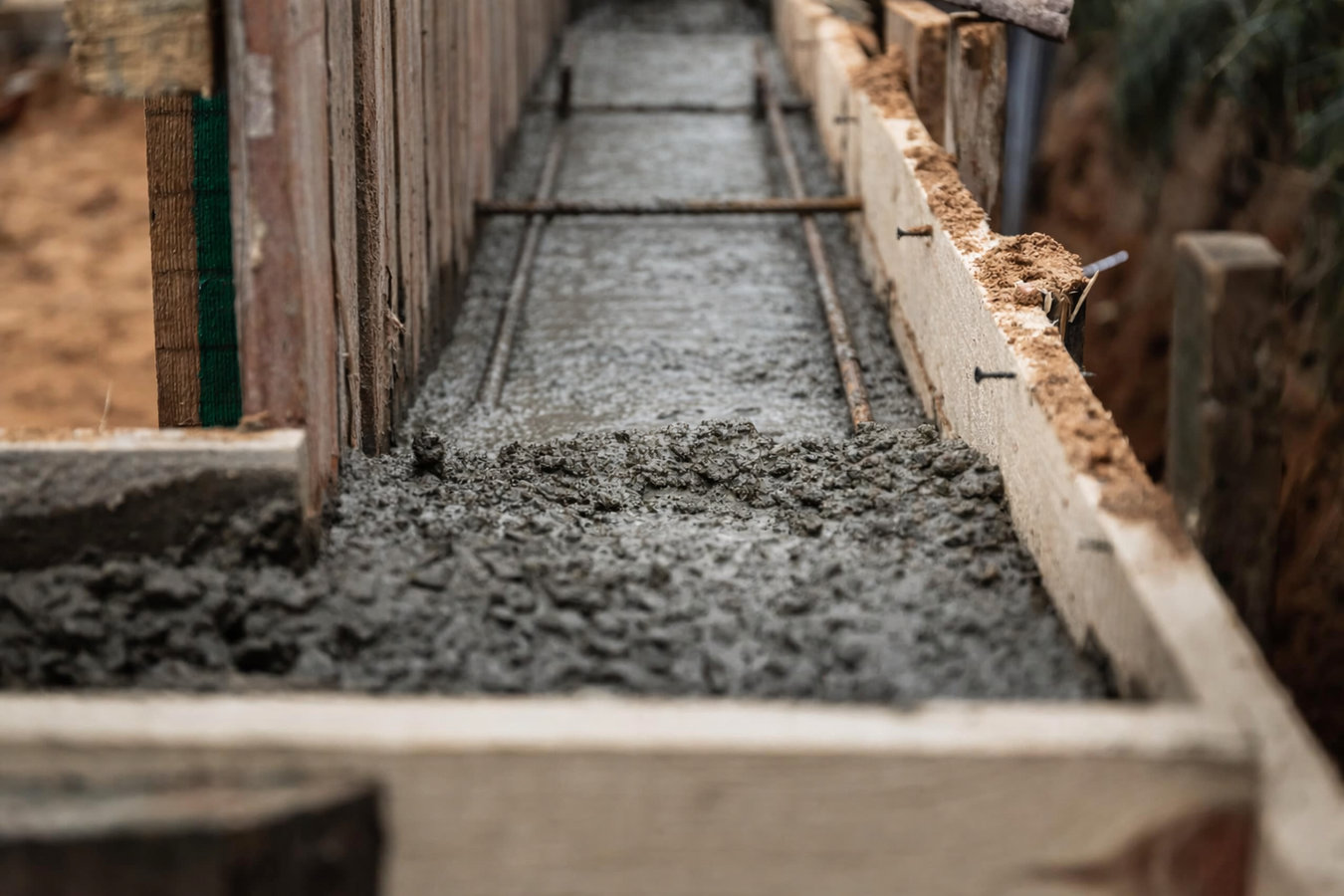
Building something new or replacing an aging foundation? We handle excavation, forming, waterproofing, and City of Midland permit coordination - so you start with a solid base and a clean record.
Foundation installation in Midland covers the full sequence from excavation to final inspection - digging below Michigan's 42-inch frost line, forming and pouring the concrete, applying waterproofing to exterior walls, backfilling, and coordinating City of Midland building permits at every stage. Most residential projects take four to six weeks from first contact to a completed, inspected foundation.
Midland's housing stock skews older, and a lot of the work we do here involves homes built between the 1940s and 1970s where owners are adding on, replacing deteriorated foundations, or starting new construction on existing lots. The process is more involved than a simple slab pour - it includes soil assessment, forming for walls or footings, waterproofing, and drainage grading around the perimeter. If your project needs a flat pad without full walls, our slab foundation building service may be the right fit instead.
Cracks that angle outward from the corners of door frames or window openings - especially in basement walls - are often a sign the foundation is moving unevenly. In Midland, this kind of movement is frequently tied to the freeze-thaw cycle working on footings that were not set deep enough or were not properly waterproofed. A crack you can fit a quarter into is worth having looked at right away.
When a foundation shifts, the frame of the house shifts with it - and the first place you usually notice is doors and windows that suddenly do not open or close the way they used to. This is especially common in Midland homes built before the 1980s, when foundation standards were less consistent. If multiple doors started sticking around the same time, that pattern is more telling than a single sticky door.
Midland gets significant snowfall each winter, and the rapid snowmelt in March and April puts a lot of water pressure against basement walls. If you find water on your basement floor or damp patches after a big rain or a warm spell in early spring, the waterproofing on your foundation may have failed. This is a sign that the foundation needs professional attention before the problem gets worse.
Stand in your basement and look along the walls from one end to the other. If a wall looks like it is curving inward - even slightly - that is a sign of lateral pressure from the soil outside. This is more common in Midland's clay-heavy soil areas, where wet soil expands and pushes hard against foundation walls. A bowing wall is not a cosmetic issue; it gets more expensive to fix the longer it is left alone.
We install foundations for new home construction, major additions, and garage builds throughout Midland and the surrounding area. Every project starts with a site assessment - soil type, grade, access for equipment, and proximity to existing structures all shape the plan. For projects that need a full poured-concrete basement, we form, pour, strip, and waterproof the walls before backfilling so you are not calling us back about a wet basement three years later. Larger commercial projects that need a graded concrete surface alongside the foundation can be combined with our concrete parking lot building work.
If your project requires a flat slab rather than full foundation walls - a garage, sunroom, or workshop - we handle that under our slab foundation building service. The two often go hand in hand on larger projects, and we can scope both during the same site visit so you are not managing two separate contractors. Either way, the permit, inspection, and frost-depth requirements are the same - and we handle all of it.
The right starting point for any new home, garage, or major addition in Midland - full excavation, forming, pour, waterproofing, and inspection included.
Best for homeowners who want usable below-grade space, with full-height poured walls, waterproofing membrane, and perimeter drainage.
Suited for matching a new foundation to an existing structure - room additions, sunrooms, and large accessory buildings that need a code-compliant base.
Midland sits in Michigan's Lower Peninsula, where ground freezing to 42 inches or more every winter is a given. That frost depth requirement drives the cost and timeline of every foundation project here - more excavation, more concrete, more time. Midland County's soils are a mix of sandy loam and clay-heavy deposits left by glaciers, and what sits under your specific lot matters: sandy soil drains well but can shift, while clay holds water and expands against foundation walls when wet. We assess both before committing to a plan or a price.
Homes near the Tittabawassee River corridor in Midland carry a higher exposure to groundwater and soil saturation - the 2020 dam failures that flooded parts of the city are a reminder that waterproofing is not optional in this area. We do full exterior waterproofing on every foundation we install before backfilling. We also serve homeowners throughout the broader region, including Flint and Saginaw, where many of the same frost depth and soil conditions apply.
When you reach out, we ask a few basic questions - what you are building, the approximate size, and whether an existing structure is involved. We schedule a site visit before giving you a firm number, because foundation pricing depends heavily on your specific soil, grade, and access. Expect a site visit within a week or two and a reply to your inquiry within one business day.
Before any digging starts, we apply for a building permit through the City of Midland Building Department on your behalf. The permit review typically takes one to two weeks. We handle the application and keep you updated - your job is to confirm any project details we need before submission.
On the first day of active work, the crew arrives with excavation equipment to dig down past Midland's 42-inch frost line. Expect noise, heavy equipment on your property, and displaced soil staged nearby until backfilling. The crew then sets forms - temporary structures that shape the concrete walls or footings - and places steel reinforcement inside.
Concrete is poured into the forms on a weather-checked day - we will reschedule if overnight temps are expected to drop below freezing. After the concrete cures, we remove the forms and apply a full waterproofing coating to the exterior walls before backfilling. The city inspector then reviews the finished foundation before the permit is closed out, giving you a documented record that the work was done to code.
Foundation pricing depends on your specific lot and soil - a phone quote is just a guess. We visit your site, assess the conditions, and give you a real number you can plan around. Spring slots book early.
(989) 486-6774We excavate to Michigan's required frost depth on every foundation we install. Footings set above that line heave with the ground each winter - footings set below it stay put. This is the most important thing we do to protect your investment in Midland's climate.
Every exterior foundation wall gets a complete waterproofing membrane before any soil goes back in. Midland's March snowmelt puts real pressure against basement walls - a properly sealed foundation is what stands between that water and your finished space. We treat waterproofing as part of the job, not an add-on.
We pull every required City of Midland permit and coordinate all city inspections before, during, and after the pour. You get a documented record of every stage - the kind of paper trail that protects you at resale and with your insurer. See permit requirements at the City of Midland Building Department.
Homes built in the 1940s through 1970s sometimes reveal surprises once excavation begins - deteriorated footings, old drainage tile, or soil that has shifted over decades. If we find something unexpected, we stop and show you what we found before proceeding. No surprise invoices at the end. The American Concrete Institute guidelines we follow include protocols for exactly these situations.
Every one of these points comes back to the same idea: a foundation that performs correctly and a project record that holds up. We handle the process from first contact to final city inspection so you can focus on what you are building on top of the concrete, not the paperwork underneath it.
Standalone slab pours for garages, additions, and accessory structures - permited and built to Michigan's frost depth requirements.
Learn MoreCommercial and multi-unit concrete paving for lots and access areas that need a durable, properly graded surface.
Learn MoreOur spring calendar fills quickly once the ground thaws - call or submit a request today and we will schedule your site assessment within one business day.