
Loading...
Serving Midland, MI and surrounding areas. (989) 486-6774
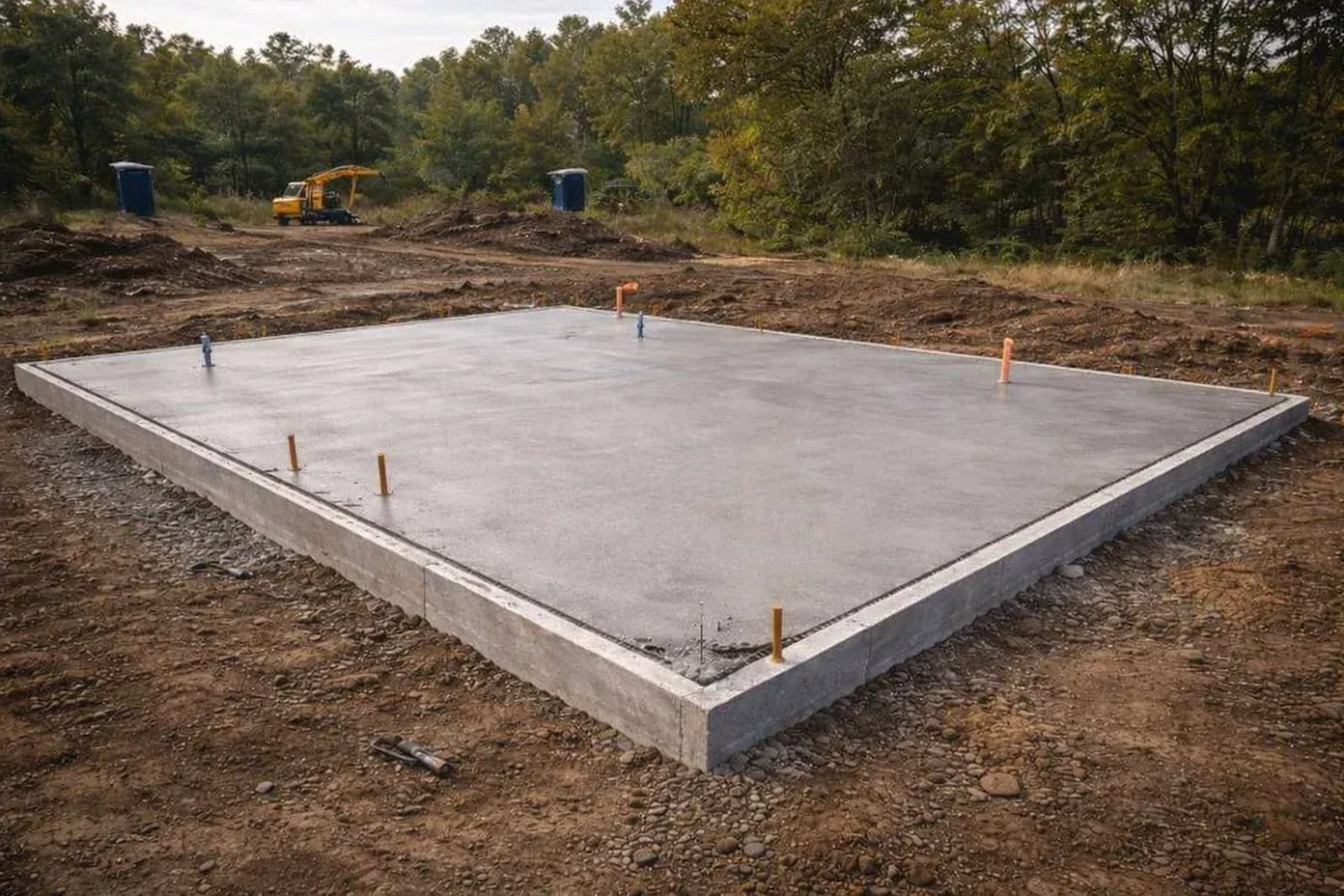
Adding a garage, room addition, or new structure? We pour reinforced slab foundations with frost-depth footings, proper moisture barriers, and full City of Midland permit coordination.
Slab foundation building in Midland means pouring a reinforced concrete pad on a properly prepared base, with footings set at least 42 inches deep to get below Michigan's frost line. Most residential projects take one to two weeks of on-site work, followed by a 28-day curing period before heavy construction can begin on top.
A lot of homeowners in Midland are adding garages, sunrooms, or accessory structures to homes built in the 1950s through 1980s - and every one of those projects needs a solid foundation before framing begins. The work involves more than just pouring concrete: it means assessing your soil, setting the forms to the right depth, laying a moisture barrier, placing steel reinforcement, and coordinating the City of Midland permit and inspection. If you are also planning foundation installation for a larger project, we handle that too.
If you are adding a garage, a room addition, or any structure that needs a permanent base, you need a slab foundation before anything else can happen. There is no existing foundation to repair - just a project that cannot move forward without one. A concrete contractor will assess your site and tell you what ground preparation will involve.
Hairline cracks in older concrete are usually cosmetic, but cracks wider than a quarter inch - or sections where one side sits higher than the other - suggest the slab has moved. In Midland, this often happens when soil was not properly compacted at the original pour or when freeze-thaw cycles have gradually shifted the ground. If you can fit a pencil into a crack, have a contractor take a look.
When a slab shifts, the walls sitting on top of it shift too, and the first sign is often a door or window that suddenly does not close the way it used to. This is worth paying attention to in Midland homes built in the 1960s and 1970s, where original slabs may not have been poured to current frost depth standards. It does not always mean full replacement, but the foundation should be evaluated.
A slab without a proper moisture barrier can allow groundwater to wick up through the concrete and into your living space. In Midland, spring snowmelt and heavy rain seasons make this worse, and you may notice it most from March through May. If your floors feel damp, flooring is buckling, or there is a persistent musty smell at floor level, the slab's moisture protection may have failed.
We pour residential slabs, addition slabs, and accessory structure pads throughout Midland. Every project starts with a site assessment - we look at your soil, the grade of the land, and any drainage considerations before we commit to a price or a plan. That assessment is also how we decide whether the slab connects to a larger foundation installation scope or stands on its own as a standalone slab pour.
When a project calls for isolated load-bearing points rather than a full pad, we also pour concrete footings as a standalone service - useful for decks, pergolas, and additions where only specific points need ground support. Whether you need a full slab or targeted footings, the prep work is the same: correct depth, compacted base, moisture barrier, and reinforcement before any concrete is placed.
Best for homeowners adding garages, sunrooms, workshops, or new home construction that needs a code-compliant, permitted base.
Suited for matching a new slab to an existing structure - whether a bump-out, mudroom, or attached structure - with attention to transition joints.
Right for standalone sheds, barn conversions, or detached buildings where the slab does not need to match an existing finished floor.
Midland sits in Michigan's Lower Peninsula, where the ground freezes to 42 inches or more every winter. That frost depth requirement means every footing we pour has to be excavated deeper than a contractor in a warmer state would ever need to dig. It adds time and material cost - but it is what separates a foundation that holds for decades from one that starts shifting after its first few winters. Midland's sandy loam soils drain well, which actually works in your favor, but only if the soil was properly compacted before the pour. We assess both factors at your specific site before we give you a number.
Most of the projects we see in Midland involve homes built in the 1950s through 1970s, where owners are adding garages, workshops, or attached structures that the original house was never designed to include. Booking early matters here - spring and early summer are the busiest season for slab pours, and contractor availability in Midland fills up fast once the ground thaws. We also work throughout the surrounding area, including Saginaw and Alma, so if your property is outside Midland city limits, reach out and we can confirm coverage.
When you reach out, we will ask a few basic questions - what you are building, how large the slab needs to be, and whether you have an existing site or need ground cleared first. We schedule a site visit before giving you a firm price, because soil conditions and access can change the cost. Most site visits take 30 to 60 minutes, and we reply to all new inquiries within one business day.
Before any work begins, we submit a permit application to the City of Midland's building department on your behalf. Plan review typically takes one to three weeks. Your job during this phase is to confirm any project details we need - we handle the paperwork and keep you updated.
This phase is often the most involved. The crew excavates to the required frost depth, removes unstable soil, compacts a gravel base, lays the moisture barrier, and sets up the wooden forms that shape the concrete. Expect equipment on your property and the work area to be off-limits during this phase.
On pour day, a concrete mixer truck arrives and the crew fills the forms, works out air pockets, and finishes the surface. The pour for a typical residential slab takes a few hours. Concrete then cures for at least 28 days before heavy construction can begin on top - we cover the surface if weather requires it, and we coordinate the final city inspection to close out the permit.
No obligation. We assess your site, review the soil, and give you a clear price before you commit to anything. Spring booking fills up fast - reach out now to lock in your start date.
(989) 486-6774We set every footing at or below the 42-inch frost depth Michigan requires for the Lower Peninsula. Footings that are too shallow shift with the ground every winter - ours are built to stay in place whether it is February or July, protecting everything you build on top of them.
We pull every required City of Midland permit before a shovel hits the ground and stay on-site for every city inspection. You get a clean paper trail that protects your home's value - and you never have to worry about unpermitted work surfacing when you sell.
We assess your specific site - soil stability, drainage, and access - before committing to a number. If we find something that needs addressing, we tell you before it becomes a surprise on your invoice. No phone-estimate guesses, no change orders halfway through.
Michigan's spring and fall weather means pour conditions can change fast. We follow cold-weather concreting guidance from the American Concrete Institute and have insulated curing blankets ready when temperatures drop. Your slab cures the way it is supposed to, not the way the weather decides.
Every one of these points comes back to the same thing: a slab you can build on with confidence, backed by a permit record that holds up. We handle the process from first call to final inspection so you can focus on the project above the concrete, not the paperwork beneath it.
Full foundation work for new builds and major additions, including excavation, forming, waterproofing, and permit management.
Learn MoreStandalone footing pours for decks, additions, and structures that need a solid base without a full slab.
Learn MoreSpring booking slots fill fast - call or submit a request today and we will schedule your site assessment within one business day.